Small businesses often manage marketing across a collection of separate tools. Website content may be handled in one place, social media in another, email in a third, and lead information somewhere else. This arrangement can make routine work slower and make it harder to see how each activity supports the broader marketing plan.
A digital marketing platform for small businesses brings key marketing tasks into a more organized workflow. Depending on the platform, it may support content management, search engine optimization, blogging, social media marketing, email marketing, lead capture, paid advertising management, and related agency services. The goal is not simply to add another tool. It is to create a clearer way to plan, publish, improve, and manage digital marketing activities.
What Is a Digital Marketing Platform?
A digital marketing platform is a centralized system used to manage online marketing work. It can help a business organize website content, prepare campaigns, publish updates, improve pages for search, and collect information from prospective customers. Some platforms are designed for individual businesses, while others are built for agencies managing multiple client websites.
For a small business, the value of a platform usually comes from coordination. Instead of treating the website, search visibility, social media, content, and lead capture as unrelated tasks, a platform can help connect them within one repeatable process.
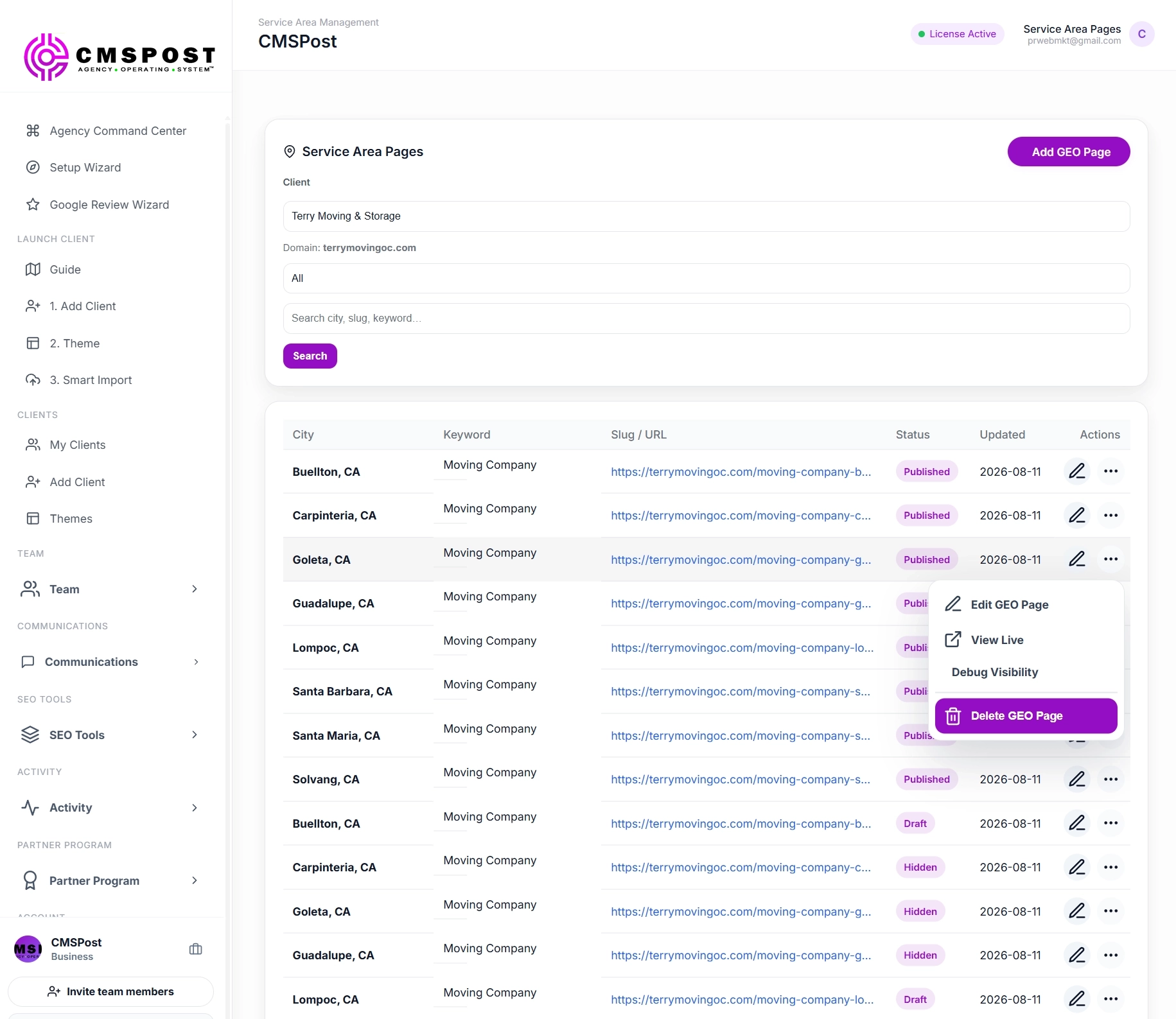
CMS POST INC describes its solution as a lightweight, downloadable, white-label Agency Operating System. The system is built around managing client websites and can be used to import an existing client website, organize its content, strengthen its SEO, and deploy optimized pages. That focus can be useful for businesses and agencies that want a more structured approach to ongoing digital marketing work.
Why Small Businesses Use Digital Marketing Platforms
Marketing teams at smaller organizations commonly work with limited time and resources. Owners or staff may be responsible for several marketing tasks in addition to their primary business duties. A well-chosen platform can reduce unnecessary switching between systems and establish a consistent workflow.
Centralized organization
Content, page updates, blog publishing, SEO improvements, and campaign tasks can be easier to manage when they are organized in a central system. This does not eliminate the need for planning, but it can make it easier to identify what has been completed and what still needs attention.
More consistent publishing
Regularly updating a website or social channel is easier when the work follows a repeatable process. A platform can support content planning, editing, publishing, and review so that marketing does not depend entirely on remembering individual tasks.
Better coordination between channels
A blog article, social media post, search-focused page, and lead form can serve different purposes while supporting the same campaign. Managing these activities with a shared plan helps reduce duplicated work and keeps messaging more consistent.
Clearer lead handling
Form lead capture gives interested visitors a direct way to make contact. When forms and follow-up steps are part of the marketing workflow, a business can create a clearer path from website visit to inquiry. The platform itself does not replace timely human follow-up, but it can help make the process easier to define.
Core Capabilities to Look For
The right capabilities depend on a business’s goals, staff, budget, and existing website. The following areas are useful starting points when evaluating a digital marketing platform for small businesses.
Content management
Content management should make it practical to organize and update website pages. Look for a workflow that supports editing, reviewing, and publishing without making every small change unnecessarily complicated. Clear organization is especially important when a site contains service pages, location information, educational content, and calls to action.
If an existing website can be imported or organized within the system, the business may be able to begin with its current digital assets rather than rebuilding every piece from the beginning. Any migration should still include a careful review of page structure, content quality, links, forms, and search-related settings.
Search engine optimization
SEO tools can help identify opportunities to improve page titles, headings, descriptions, content structure, and internal organization. A useful platform should support thoughtful optimization rather than encouraging repeated keywords or generic copy.
For small businesses, SEO work often begins with making important pages clear and useful. Each page should have a defined purpose, address a real customer question, and make the next step easy to understand. Technical and local considerations may also matter, depending on the business model and target market.
Blogging and educational content
Blogging can help a business answer common questions, explain its process, and provide useful information before a customer makes contact. A platform that supports blogging can help organize topics, drafts, publishing schedules, and updates.
Effective business content should not be created only to fill a calendar. A stronger approach is to begin with questions customers actually ask, then produce clear answers that connect naturally to the business’s offerings.
Social media marketing
Social media marketing can extend the reach of website content and give a business another way to communicate with its audience. A platform or connected workflow may help organize social content around blog articles, announcements, educational posts, or campaign themes.
Social activity works best when it has a clear role. Some posts may build awareness, while others may encourage website visits or inquiries. Defining the purpose of each type of post can make social media work more focused.
Email marketing
Email marketing can support ongoing communication with people who have chosen to hear from a business. It may be used for educational updates, announcements, content distribution, or follow-up communication. A platform should be evaluated based on how it supports list management, message planning, permission practices, and measurement.
Form lead capture
Lead capture forms should request information that is genuinely useful for the next step. A short form may be appropriate for a general inquiry, while a more detailed form may help organize a specific request. The form should be easy to find, simple to complete, and connected to a clear response process.
Paid advertising management
Some platforms or marketing providers also support PPC management. Paid campaigns require deliberate planning, budget control, audience selection, landing page alignment, and ongoing review. A platform can help organize this work, but advertising performance depends on the strategy, market, offer, creative, and other campaign factors.
How the Process Typically Works
Using a digital marketing platform effectively is a process rather than a one-time setup. A practical workflow can include the following stages.
- Review the current digital presence. Begin by examining the existing website, important pages, content, search visibility, social channels, forms, and current marketing activities. This creates a baseline for deciding what should be kept, improved, or replaced.
- Set business and marketing priorities. Choose a manageable set of objectives. These might include improving website organization, publishing useful content, increasing relevant inquiries, or creating a more consistent social media process.
- Organize the website and content. Group pages logically, clarify their purpose, and identify content gaps. Existing website content can then be reviewed for accuracy, usefulness, readability, and alignment with customer needs.
- Optimize priority pages. Improve the pages that matter most to the customer journey. This may include refining page titles, headings, descriptions, copy, calls to action, and internal navigation.
- Create a publishing plan. Decide what content should be published, who will prepare it, when it will go live, and which channels will support it. A realistic plan is more useful than an ambitious schedule that cannot be maintained.
- Connect lead capture to follow-up. Review forms and inquiry paths so visitors understand what happens after submitting their information. Assign responsibility for checking and responding to new inquiries.
- Review and improve. Revisit the workflow regularly. Update outdated content, identify pages that need attention, and adjust activities based on business priorities and available information.
Use Cases for Small Businesses
A digital marketing platform can support different business situations. A company with an older website may use it to organize and improve existing pages. A growing business may use it to establish a repeatable content and SEO process. A business with several people involved in marketing may use it to clarify responsibilities and reduce duplicated effort.
Agencies can also use a platform to manage multiple client websites and present services through a white-label workflow. CMS POST INC specifically positions its system around serving every client from one platform, including importing existing client websites, organizing content, strengthening SEO, and deploying optimized pages.
Another use case is coordinating several marketing activities around one business priority. For example, a business could create an educational article, share it through social media, guide visitors to a relevant page, and provide a form for follow-up. The individual activities remain distinct, but the platform can help keep them connected.
Benefits and Limitations
The potential benefits of a digital marketing platform include a more organized workflow, easier content maintenance, improved coordination, and a clearer process for managing leads. Centralization may also make it simpler to identify gaps in a website or campaign plan.
However, a platform is not a substitute for useful content, accurate business information, sound marketing judgment, or responsive customer service. It cannot guarantee search rankings, a specific number of leads, or a particular return on advertising spend. Results depend on implementation, competition, audience needs, content quality, and many other factors.
Businesses should also consider onboarding, support, data access, user permissions, integrations, export options, and the amount of work required to maintain the system. The most suitable platform is one that the business can use consistently and that matches its actual workflow.
Questions to Ask Before Choosing a Platform
- Which marketing tasks need to be managed in one workflow?
- Can the platform support the existing website and content structure?
- Does it provide practical tools for content management and SEO?
- How will blog posts, social content, email activity, and forms be organized?
- Who will own publishing, approvals, updates, and lead follow-up?
- Can the system support multiple websites if an agency manages several clients?
- What information is available for reviewing completed work and planning improvements?
- How easy is it to access, update, and maintain the content over time?
Getting Started
Start with a focused review rather than trying to change every part of digital marketing at once. Identify the website pages that matter most, the questions customers ask frequently, the lead paths that need attention, and the marketing tasks that are currently difficult to coordinate.
Next, choose a small set of improvements that can be completed and maintained. Organize priority content, strengthen the most important pages, establish a realistic publishing process, and make sure inquiries have a clear next step. Once that workflow is working, additional activities can be added with greater confidence.
A digital marketing platform for small businesses is most useful when it turns scattered tasks into a manageable system. By combining content management, SEO, blogging, social media marketing, email activity, and form lead capture within an organized process, a business can create a stronger foundation for ongoing online marketing.
Ready to organize your digital marketing workflow? Contact CMS POST INC at 914-907-7493 or visit cmspost.com to learn more.